
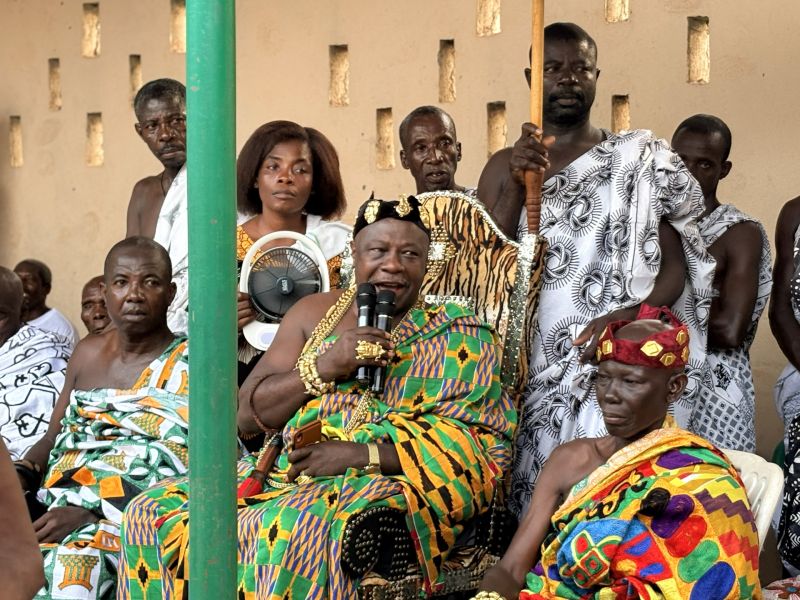
After losing a 350-hectare community forest reserve over time, residents of Assin Wurakese in the Central region of Ghana are renewing efforts to restore degraded landscapes and rebuild community ownership of hashtag#forests.
According to Nana Dankwa Ameyaw, Chief of Assin Wurakese, the community once managed a vast forest reserve that gradually disappeared due to limited resources to sustain it. Today, there is a renewed push to restore that legacy through collective action.
“Forests are not just trees; they are our heritage and our future,” said Nana Dankwa Ameyaw. “Communities must take ownership, demarcate land, plant trees, and nurture them into resilient forests.”
With support from the hashtag#EnABLE Ghana Project, residents are taking steps to plant native hashtag#trees and restore degraded landscapes in their communities.
The initiative highlights the critical role of traditional leadership and community ownership in restoring degraded landscapes and strengthening hashtag#climate hashtag#resilience.
The Enhancing Access to Benefits while Lowering Emissions (EnABLE) Project, is funded by The World Bank Group, and implemented in Ghana by Solidaridad West Africa and Tropenbos Ghana.
Alfred Fosu, Prof. Winston A. Asante, Evans Sampene Mensah, Dennis Ahari Ayisi Otu, Dominic Antwi-Boasiako, Samuel Kesse Kingsford